

Updated Feb 18, 2026
KEY STATS
1.4M
Population
501 km2
Area
240 Mbps
Internet
UTC+09:00
Timezone
KWJ (11km)
Airport
OVERVIEW
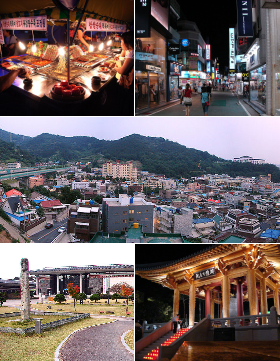
Gwangju's democratic spirit shines through its street art and May 18 memorials, complemented by a thriving craft beer scene and K-pop cafes that keep evenings lively. South Korea's ubiquitous high-speed internet and affordable hanok guesthouses make it a nomad-friendly hub with quick KTX trains to Seoul.
QUICK FACTS
Country
South Korea
Region
Eastern Asia
Population
1.4M
Timezone
UTC+09:00
Language
Korean
Airport
KWJ
GPS
35.15, 126.92
DROPTHE_ GOSSIP
Food
785 restaurants mapped in Gwangju
Tech
240 Mbps average download — faster than most capital cities worldwide
A major city with a population of 1,398,538
INFRASTRUCTURE
13,414 total POIs 26.8 per km²
Above avg per capita
Average
Below avg
Food & Drink
Restaurants
785
Cafes
424
Bars
65
Fast Food
154
Shopping
Supermarkets
449
Convenience
300
Shopping Malls
17
Healthcare
Hospitals
218
Clinics
492
Pharmacies
70
Education
Schools
594
Universities
23
Libraries
76
Recreation
Parks
918
Playgrounds
465
Sports
92
Cinemas
21
Museums
46
Theatres
8
Transport
Bus Stops
2,612
Train Stations
29
Fuel Stations
239
Services
Banks
232
ATMs
15
Post Offices
62
Police
41
Fire Stations
22
Source: DropThe Database | dropthe.org
INTERNET SPEED
240 Mbps
Download
203 Mbps
Upload
11ms
Latency
4,042
Tests
1,330
Devices
2025-Q4
Last updated
CLIMATE
Best time to visit: May - Sep
3°
J
4°
F
8°
M
14°
A
20°
M
24°
J
25°
J
24°
A
20°
S
14°
O
8°
N
4°
D
18-28 C ideal
Warm/Cool
Extreme
Year avg: 14 C Range: 2.8 - 25.1 C Rain: 1,502 mm/year Sunshine: 2,844 h/year
CITY SCORES
95.1
Nomad Index
A
Livability
37.5
Culture
63.6
Overall
AIRPORT
KWJ
Gwangju Airport
11 km from center
Very close — ~17 min ride
FUN FACTS
Gwangju (Korean: 광주; Korean: [kwaŋ.dʑu] ), formerly romanized as Kwangju, is South Korea's sixth-largest metropolis.
The city was also the capital of South Jeolla Province until the provincial office moved to the southern village of Namak in Muan County in 2005 because Gwangju was promoted to a metropolitan city and was independent of South Jeolla Province.
Gwangju was historically recorded as Muju (무주; 武州), in which "Silla merged all of the land to establish the provinces of Gwangju, Ungju, Jeonju, Muju and various counties, plus the southern boundary of Goguryeo and the ancient territories of Silla" in the Samguk sagi.
In the heart of the agricultural Jeolla region, the city is also famous for its rich and diverse cuisine.
It was one of the administrative centers of Baekje during the Three Kingdoms period.
EXTERNAL LINKS
FREQUENTLY ASKED QUESTIONS
What is Gwangju known for?
Gwangju's democratic spirit shines through its street art and May 18 memorials, complemented by a thriving craft beer scene and K-pop cafes that keep evenings lively. South Korea's ubiquitous high-speed internet and affordable hanok guesthouses make it a nomad-friendly hub with quick KTX trains to Seoul.
How fast is the internet in Gwangju?
Gwangju has an average download speed of 240 Mbps and upload speed of 203 Mbps, based on Ookla speed test data.
What is the weather like in Gwangju?
Gwangju has an average year-round temperature of approximately 14 degrees Celsius.
What airport serves Gwangju?
Gwangju is served by KWJ (Gwangju Airport), approximately 11 km from the city center.
What is the population of Gwangju?
The population of Gwangju is approximately 1.4M.
What infrastructure does Gwangju have?
Gwangju has 13,414 mapped points of interest, including 785 restaurants, 218 hospitals, 594 schools.
What country is Gwangju in?
Gwangju is located in South Korea.